Kennington
Of Human BondageKennington is the South London neighborhood that becomes both Philip Carey’s home during medical school and a base for his emerging work as a doctor. Its modest rooms give him a place to arrange reminders of his artistic past; its nearby hospital and surrounding streets draw him into sustained contact with the poor, illness, childbirth, and death. The location links the private work of making a home to the public demands of clinical care.
Setting and Philip’s Rooms
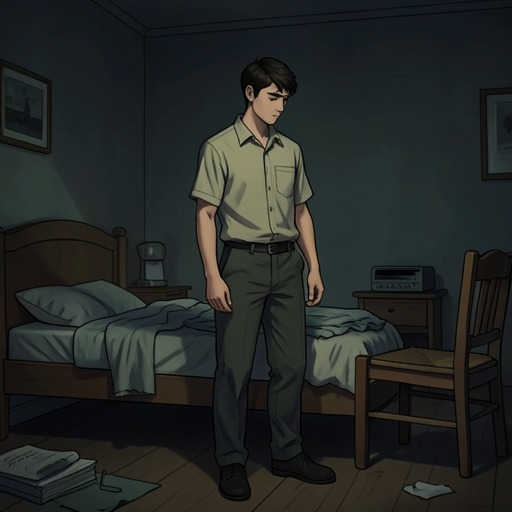
A couple of days before the medical session began, Philip searched for lodgings in streets leading from Westminster Bridge Road. Their dinginess put him off, but he chose a quiet, old-fashioned street in Kennington, where plane trees were coming into leaf. The house offered four small unfurnished rooms for nine shillings a week. Its austere landlady would not clean or cook for him, a degree of distance Philip welcomed as he prepared to settle in without fuss.
Philip furnished the rooms from what he had gathered over time: an armchair bought in Paris, a table, drawings, and the small Persian rug Cronshaw had given him. His uncle supplied a folding bed, and Philip spent another ten pounds on necessities. He papered the room he meant to use as a parlour in a corn-coloured shade, then hung a sketch of the Quai des Grands Augustins, photographs of Ingres’s Odalisque and Manet’s Olympia, and his charcoal drawing of Miguel Ajuria. The pictures and rug made the rooms more than cheap accommodation: they brought the history of Philip’s artistic life into the home of a student who had turned toward medicine.
A Home Shared with Cronshaw
When Philip later found Cronshaw ill and unwilling to pay rent for his own room, he offered him an empty room in his lodgings. The offer meant extra expense for Philip, but he could not bear the thought of Cronshaw staying where he was. Cronshaw accepted, and Philip arranged the move around his hospital schedule, buying a second-hand bedstead, a cheap chest of drawers, and a looking-glass for himself.
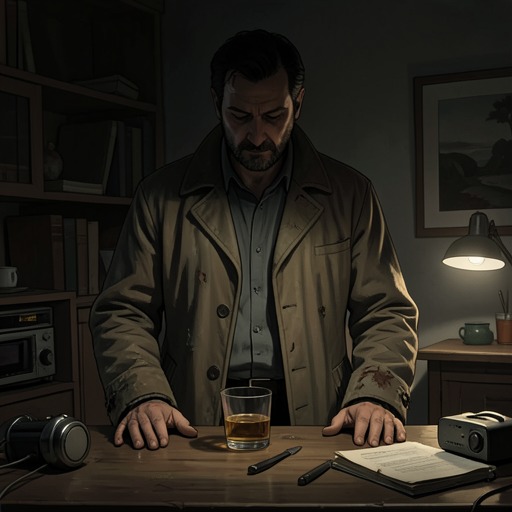
Cronshaw arrived with his clothes and books packed in a small portmanteau and settled in to correct proofs. He refused to see Dr. Tyrell, knowing that a doctor would tell him to stop drinking. Philip’s efforts to make Kennington a refuge could not remove the severity of Cronshaw’s illness: Cronshaw continued to spend time in Soho’s cheapest restaurants, and his health remained precarious. About a fortnight after Philip brought him in, Philip found him lying unresponsive in his room and ran for medical help. Kennington thus becomes the setting for Philip’s final attempt to care for his old friend, as well as for Cronshaw’s death.
Hospital and Clinical Work
Kennington’s position near St. Luke’s Hospital brings Philip’s domestic life into close reach of his medical training. In the dissecting-room, after a lecture, Philip encounters the atmosphere of practical anatomy; later, as a student clerk, he works among the hospital’s outpatients. The department’s dim waiting room and adjoining clinical rooms bring patients of many ages and circumstances through a system that records their names, ages, occupations, and diagnoses. The institutional setting offers medical knowledge, but also exposes the daily conditions that lie behind a case in the register.
The work affects Philip beyond his formal duties. The patients’ faces, speech, and different responses to illness interest him, and he finds that he can put them at ease and gain their confidence. He recognizes in this direct engagement a kind of creative power distinct from his former pursuit of beautiful images: where he had once concentrated on colour and tone, he now observes people and learns how to ask questions they can understand. Kennington and the hospital therefore mark not simply a change of residence or profession, but a change in the object of Philip’s attention.
The District and Its Patients
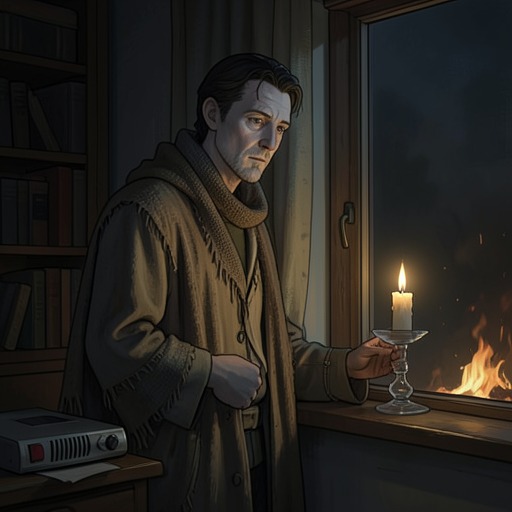
At the beginning of the last week in August, Philip begins work in the hospital’s district, attending on average three confinements a day. Messengers bring the patients’ cards to the lodgings where he lives; at night, the porter sometimes wakes him, and he walks with a messenger through the deserted streets to a patient’s home. The trips can take a mile or more. Along the way, conversation about labour and the cost of living teaches Philip more about the trades and pressures of the South Side.
The houses he visits vary in appearance, but many are crowded and dilapidated. Some are squalid courts without light or air; others retain carved oak balusters and panelling beneath leaking roofs and damaged floors. Families live in single rooms, children play in the courts, and residents make do with little. Philip’s experience of hardship has taught him to recognize the small evasions by which people manage their circumstances. He is valued for being kind, having gentle hands, keeping his temper, and sharing tea rather than holding himself apart.
The district work also brings Philip close to the limits of medical care. In one childbirth, he and Chandler work to keep a woman alive, but she dies as dawn approaches. Her husband stands beside the bed in bewilderment, with no place to lie down afterward. The scene gives the clinical district its human measure: professional attendance takes place inside homes shaped by poverty, and the doctor’s work does not guarantee a recovery.
Narrative Significance
Kennington gathers several turns in Philip’s life into one local setting. His rooms preserve the Persian rug and images associated with art, while the hospital and district work redirect his attention toward living patients. The move also extends beyond Philip’s private development: Cronshaw’s stay makes the rooms a place of care, and the district’s households reveal the material conditions behind the cases Philip encounters as a student doctor. Kennington is consequently both an everyday domestic address and the ground on which medical practice becomes an intimate encounter with poverty, illness, and loss.